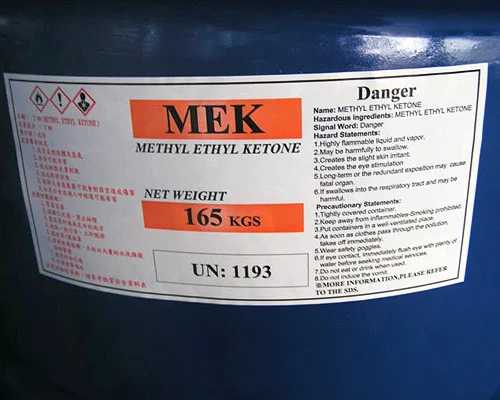
Different grades of methyl ethyl ketone (MEK) are indeed suitable for completely different application scenarios. A clear explanation of how to select products with optimal cost performance and avoid common pitfalls is provided below.
I. Different Grades of Methyl Ethyl Ketone (MEK) and Their Corresponding Applications
1. High-Purity Methyl Ethyl Ketone (≥99.5%, Premium Grade)
Features
- Low impurities, low moisture content, low acidity, and no evaporation residue
- Stable dissolving performance, no blushing, no corrosion, and pure odor
Suitable for high-demand applications
- Cleaning and photolithography processes in the electronics industry
- High-end coatings, printing inks, and food packaging inks
- PU adhesives, synthetic leather, and products sensitive to yellowing/residue
- Synthesis of pharmaceutical and fragrance intermediates
Not suitable for
- General low-cost cleaning and low-end dilution (too expensive with poor cost performance)
2. General Industrial-Grade Methyl Ethyl Ketone (Approx. 99.0%)
Features
- Sufficient purity with slightly higher impurities
- Moisture and acidity slightly higher than premium grade but still within qualified limits
Suitable for general industrial applications
- Dilution of ordinary paints and coatings
- Conventional adhesives and artificial leather production
- Routine oil stain cleaning and paint removers
- Applications with non-stringent requirements for appearance and residue
This grade delivers the best cost performance and is widely used in most factories.
3. Low-Purity / Recycled Methyl Ethyl Ketone / Blended Solvents (<99%)
Features
- May be blended with acetone, aromatic hydrocarbons, high-boiling substances; high moisture content
- Evaporation residue, mixed odor, and unstable dissolving capacity
Only applicable for
- Rough cleaning, degreasing, and low-end temporary cleaning
- Extensive applications with no strict quality requirements
Strictly prohibited for
- Coatings, printing inks, and adhesives
- Electronics and precision cleaning
- Products with requirements for transparency, odor, or residue
Otherwise, defects will occur: blushing, incomplete drying, stickiness, paint peeling, strong odor, and delamination.
II. Key Risks: Consequences of Mismatched Quality and Application Scenarios
- Using low-quality methyl ethyl ketone for high-end products → blushing, incomplete drying, residue, poor adhesion, strong odor, and product rejection
- Using high-quality methyl ethyl ketone for rough cleaning → high cost, waste, and extremely poor cost performance
- High moisture content → blushing of coatings/inks and delamination of resins
- High acidity → equipment corrosion and adhesive deterioration
- Wide distillation range/adulteration → unstable evaporation and inconsistent drying speed
- Evaporation residue → surface stickiness and interference with subsequent processes
III. Optimal Selection for Cost Performance
1. High-Demand Applications (Premium Grade Required)
- Electronics and precision cleaning
- High-end inks and coatings
- PU adhesives and synthetic leather
- Pharmaceutical and fragrance intermediates
→ Select premium grade (≥99.5%)
Saving a small amount of cost is not worthwhile compared to the high expense of a single quality accident.
2. Conventional Industrial Applications (Best Cost Performance Choice)
- Dilution of ordinary paints
- Conventional adhesives
- General cleaning and paint removal
→ Select industrial grade (approx. 99.0%)
Adequate quality with the most favorable price.
3. Low-Cost Rough Cleaning / No Quality Requirements
- Simple degreasing and temporary cleaning
→ Recycled methyl ethyl ketone or general crude solvents can be used
However, preliminary small-scale testing is required to ensure no impact on workpieces.
IV. Concise Summary (For Direct Reference by Purchasing/Colleagues)
- High-quality methyl ethyl ketone = for high-demand applications, no cost-cutting allowed
- General-grade methyl ethyl ketone = for most industrial uses, best cost performance
- Low-quality/blended methyl ethyl ketone = only for rough cleaning, strictly prohibited for coatings/inks/adhesives
- Wrong grade selection leads to either quality accidents or cost waste